Living In Dupont Circle

Grand Victorian and Edwardian rowhouses and historic condo buildings around the circle, with 17th Street, Connecticut Avenue, and P Street dining, galleries, and Red Line Metro.

Living In Dupont Circle

An overview of daily life, character, and what draws residents to the neighborhood.

Dupont Circle is one of Washington’s best-known neighborhoods, centered on the landscaped circle and fountain where Connecticut, Massachusetts, and New Hampshire Avenues meet. It is known for its late-1800s and early-1900s architecture, walkable commercial streets, and its location between downtown, Georgetown, and Adams Morgan.

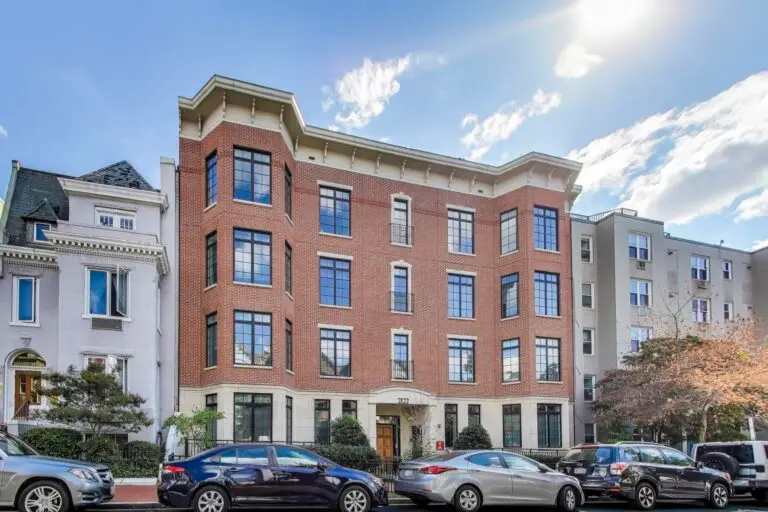
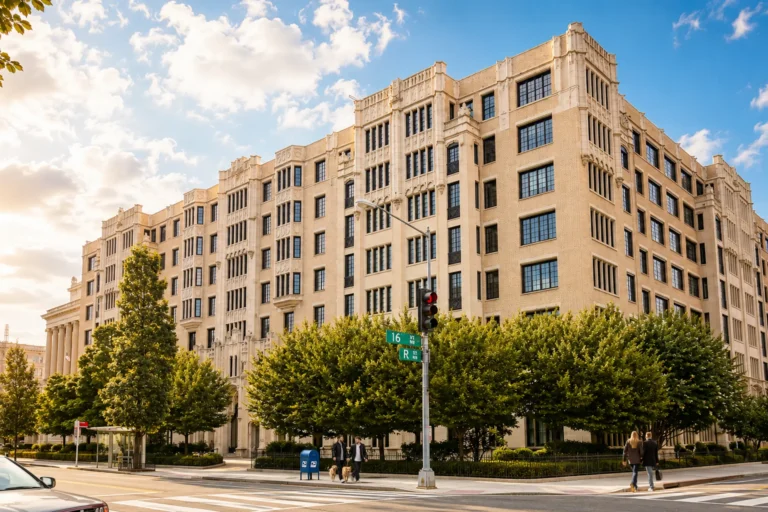
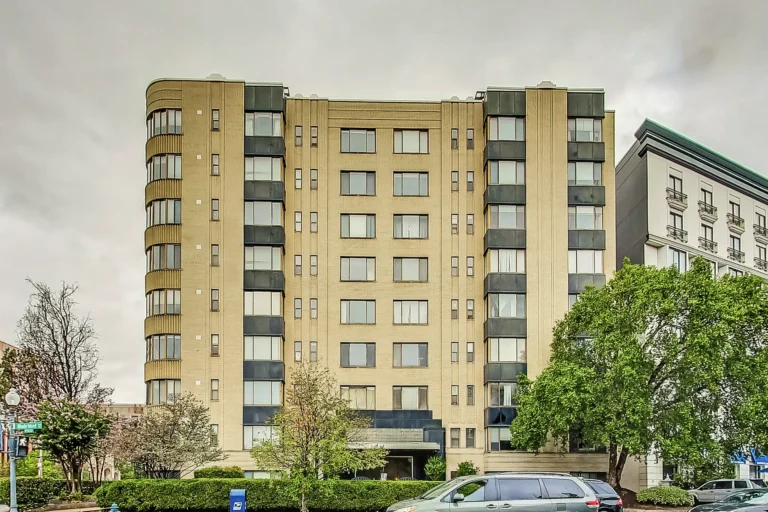
The housing stock is dominated by restored Victorian and Edwardian rowhouses, many with original bay fronts, turrets, and ironwork, alongside grand mansions along Massachusetts Avenue, historic apartment and condominium buildings, carriage houses, and a smaller number of contemporary infill projects. Much of the neighborhood lies within historic districts.

Daily life centers on walkability: 17th Street, Connecticut Avenue, 18th Street, and P Street are lined with restaurants spanning many cuisines, cafes, independent shops, and galleries, and the Sunday farmers market draws crowds. The circle itself is the neighborhood’s gathering place.

Dupont Circle station on the Red Line has entrances at both Q Street and the south side of the circle. Dupont Circle offers historic rowhouse and condo living in one of the most walkable and central parts of the city.

Key Highlights:

  • Grand Victorian and Edwardian rowhouses with original architectural detail
  • Walkable to restaurants, galleries, and independent retail
  • Dupont Circle park and fountain at the center
  • Historic apartment and condo buildings
  • Dupont Circle Metro (Red Line)
  • Sunday farmers market

Dupont Circle Real Estate FAQs

Insight into the nuances of buying and selling in one of the country’s most complex urban markets.

Dupont Circle’s pricing reflects its central location, historic architecture, walkability, and the limited supply of comparable homes. Condition, size, and exact block drive much of the variation.
Dupont Circle features Victorian and Edwardian rowhouses as the primary housing stock, with some boutique condo conversions in historic buildings. Single-family rowhouses dominate and typically range from three to five stories.
Yes, Dupont Circle is one of DC’s most walkable neighborhoods. Residents can walk to restaurants, galleries, retail, Metro, and cultural institutions. Car ownership is optional.
Dupont Circle is home to numerous galleries, the Phillips Collection, independent bookstores, and a strong roster of restaurants and bars. The neighborhood attracts artists, writers, and cultural institutions.
Dupont Circle generally sits above Logan Circle and Shaw on a per-square-foot basis and is broadly comparable to Georgetown, with wide variation between condos and full rowhouses.
Dupont Circle has one of DC’s most concentrated restaurant and bar scenes, along 17th Street, Connecticut Avenue, 18th Street, and P Street, from casual spots to fine dining.
Dupont Circle’s location, architecture, and limited supply have supported long-term demand. Compare recent sales in the same building or on nearby blocks.
Renovations of rowhouses and adaptive reuse of historic buildings have modernized much of the housing while preserving character, and demand for walkable, central homes remains strong.

Location & Neighborhood

Centrally located with elegant park as neighborhood heart and cultural center.
GENERAL BOUNDARIES:
  • NORTH: S Street NW
  • EAST: 16th Street NW
  • SOUTH: M Street NW
  • WEST: 22nd Street NW

One of DC's Most Established Neighborhoods

Dupont Circle sits where Connecticut, Massachusetts, and New Hampshire Avenues meet, within walking distance of downtown, Georgetown, the White House, and multiple employment centers. The circle and its fountain are at the heart of the neighborhood, and from there residents can walk to galleries, restaurants, bookstores, embassies along Massachusetts Avenue, and cultural institutions such as The Phillips Collection.

Neighboring Area:

  • Logan Circle — approximately 10 minutes
  • Downtown DC — approximately 10–15 minutes
  • Adams Morgan — approximately 10 minutes
  • Georgetown — approximately 15 minutes
  • Shaw — approximately 10–15 minutes

A Day In The Life - Snapshot

The quick details buyers ask about most.

Metro Access
Dupont Circle is served by the Dupont Circle Metro station (Red line), providing direct access to Capitol Hill, the U Street Corridor, and beyond. Multiple bus routes serve the neighborhood, and nearby stations on the Orange and Blue lines extend connectivity across the region.
Walkability
Dupont Circle is among the most walkable neighborhoods in DC. Most errands, dining, entertainment, and cultural destinations are reachable on foot, and many residents live without a car.
Typical Home Types
Dupont Circle features restored Victorian and Edwardian rowhouses, boutique condominiums within historic buildings, and a limited number of contemporary infill projects. Many homes retain original architectural details including crown molding, hardwood floors, and period fireplaces combined with fully updated interiors.
Parking
Street parking is available but competitive, particularly near 17th Street and P Street corridors. Some buildings and rowhouses offer limited off-street parking. Most residents rely on Metro and walkability for daily transportation.
Vibe
Historic and lively, with elegant rowhouse streets, busy restaurant corridors, galleries, and the circle as a year-round gathering place.
Best For
Buyers who want historic architecture and a walkable, central location, from a condo in a classic building to a full rowhouse, with the Red Line close by.

Dupont Circle Market Snapshot

A high-level look at current pricing, demand, and sales activity in the Dupont Circle real estate market.
$520,000

Median Sales Price

$640

Median Price Per Sq Ft

27

Median Days On Market

213

Annual Closed Sales

+4.2%

YoY Median Price Change

Dupont Circle is mainly a condominium market, with a smaller group of large rowhouses and townhouses. The snapshot covers every closed sale inside the neighborhood boundary over the trailing twelve months through September 2026 — 160 condominiums, 49 rowhouses and semi-detached homes, and 4 detached houses. Price per square foot uses interior living area.

Across all home types the median sale was $520,000 at about $640 per square foot, with a median of 27 days on market and sales averaging 95% of original list price. The median rose about 4% from the prior twelve months. Within segments, the condo median held near $417,000 and the rowhouse median rose about 18% to $1.83 million.

Market data reflects recent 12-month activity. Individual buildings may vary.

For Sale

Homes for Sale in Dupont Circle

Every active Dupont Circle listing, pulled live from Bright MLS.

Don’t see the right home?

We track private and off-market opportunities before they reach the MLS.

Recently Sold

Recently Sold in Dupont Circle

Closed sales from the past 12 months — the comps that set today’s pricing.

Wondering what your home could sell for?

Get a pricing strategy built on these comps and current Dupont Circle demand.

In-Depth Market Analysis

Dupont Circle Market Insights

How pricing trends, absorption rates, and inventory levels are shaping buying and selling

Inventory & Absorption

Dupont Circle sees steady demand, and inventory of full rowhouses is limited by historic-district protections and low turnover. Condos come up more frequently and sell quickly when well priced.

Pricing Dynamics

Dupont Circle pricing is among DC’s highest per square foot, reflecting location and architecture. Home size, renovation quality, and exact street location strongly influence pricing, and homes with original details and full modernization command the strongest prices.

Buyer Profile

Buyers here compare blocks and buildings closely on architecture, condition, outdoor space, parking, and condo fees, and often weigh Dupont Circle against Logan Circle, Kalorama, and Georgetown.

Strategic Outlook

For buyers: expect limited rowhouse inventory and rely on close comparisons of condition and size. Historic-district review applies to exterior changes. For sellers: highlight architecture, updates, outdoor space, and parking, and price to recent nearby sales.

Market Position Overview:

Inventory Level: Balanced with selective competition

Negotiation Environment: Moderate flexibility

Typical Days on Market: 25-45 (well-priced units)

Rental Demand: Consistent due to transit proximity

Long- Term Outlook: Stable, walkability-driven value

Dupont Circle Housing & Architecture

Victorian and Romanesque rowhouses, Gilded Age mansions, and condominium buildings from the 1910s onward around the circle.
Victorian Rowhouses
Brick and brownstone rowhouses from the 1870s–1900s, with turrets, bays, and Romanesque arches, fill the side streets of the Dupont Circle Historic District.
Gilded Age Mansions
Large houses from about 1890–1915 along Massachusetts Avenue and New Hampshire Avenue now serve as embassies, museums, and clubs, with a few still in residential use.
Rowhouse Flats
Many large rowhouses have been divided into condominium flats, which make up a large share of sales and offer historic detail at a lower price than a full house.
Condominium Buildings
Apartment buildings from the 1910s through the 1960s, plus a few newer ones, add elevator buildings with one- and two-bedroom homes.
The Circle
The fountain circle at Connecticut and Massachusetts Avenues is the neighborhood’s center, with a Sunday farmers market a block away.
Metro Access
Dupont Circle station (Red Line) has entrances on both sides of the circle, and Farragut North is a short walk south.

Nearby neighborhoods

Close to Dupont Circle

Ready to Talk About Your Next Move?

We’ll listen first, then recommend a strategy that fits your goals and timing.