
Potomac Plaza Cooperative
Year Built
Total Units
Stories
Parking
Unit Sizes
Price Range
Location & Neighborhood
Living in Foggy Bottom
Metro & Transit
Market Snapshot
Potomac Plaza Cooperative Market Overview
Median Sales Price
Average Days ON Market
Sale-to-list Ratio
Homes Sold (12 MonthS)
Recent Price Range
Explore Opportunities at Potomac Plaza Cooperative
- Current listings & upcoming opportunities
- Private tour scheduling
- Recent sold comps & pricing insights
Local condo specialists • Data-driven guidance • No pressure
For Sale
Available Units at Potomac Plaza Cooperative
Browse current listings and see what’s available now.
Past Sales
Sold Units at Potomac Plaza Cooperative
View sold condo units to get a general idea of pricing, finishes and details. For a full CMA Contact Us
Living in Foggy Bottom
- Housing character — 1950s–1970s co-ops and condos (Watergate, Potomac Plaza) plus 1870–1911 rowhouses in the historic district
- Green space — Potomac waterfront, Rock Creek trail, and the Kennedy Center grounds
- Daily essentials — Whole Foods and restaurants near I Street, a Wednesday farmers market, and nearby Trader Joe's in the West End
- Transit — Foggy Bottom–GWU Metro (Orange/Blue/Silver) on 23rd Street
- Schools — DCPS boundaries vary by block; confirm any address with the DCPS school finder
- Market character — about 85–110 sales a year, mostly co-ops and condominiums
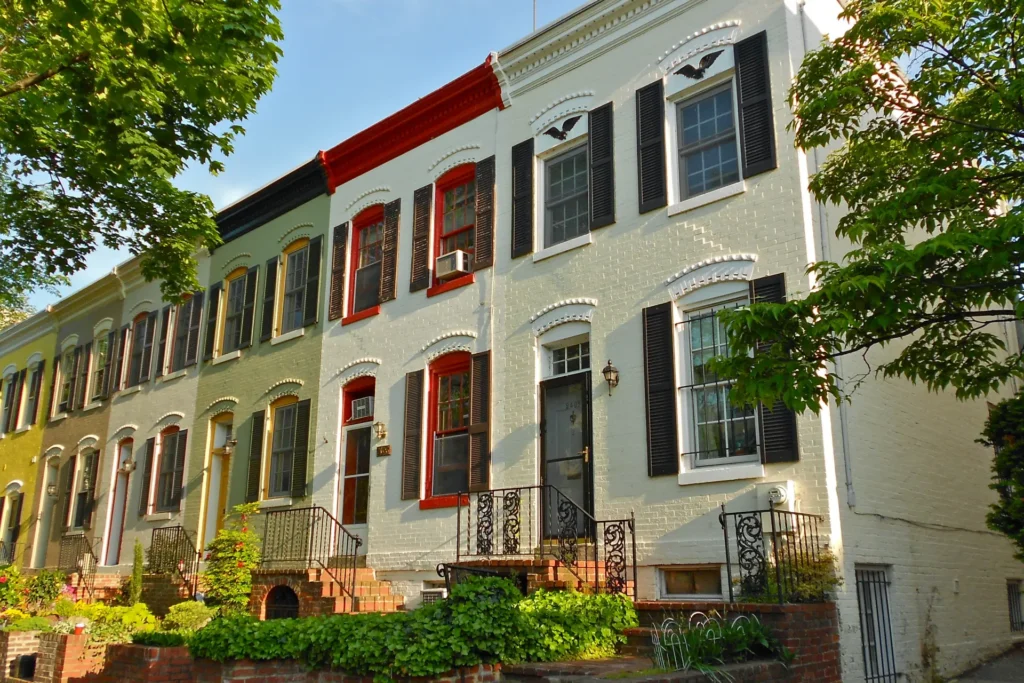
Foggy Bottom stretches from just west of the White House to the Potomac River, south of Pennsylvania Avenue and the West End and north of the National Mall. It is home to George Washington University, the State Department, and the Kennedy Center, and its residential blocks sit tucked among these institutions near the river.
Most homes are in mid-century apartment buildings, and a large share are cooperatives. Potomac Plaza (1956) at 2475 Virginia Avenue, the Watergate complex completed in the late 1960s and early 1970s — including Watergate South (1971) at 700 New Hampshire Avenue — and a series of 1950s–1970s buildings along Virginia Avenue and 24th through 26th Streets hold most of the market. The Foggy Bottom Historic District, designated in 1987, preserves small two- and three-story brick rowhouses built between about 1870 and 1911 on streets such as 24th, 25th, and 26th, and G, H, and I Streets.
Daily life is compact and walkable. A Whole Foods and restaurants cluster near the GWU campus on I Street, a farmers market has run on I Street on Wednesdays since 2005, and the Kennedy Center offers performances year-round. The Potomac waterfront, Thompson Boat Center, and Rock Creek trail are at the western edge.
Foggy Bottom–GWU station on the Orange, Blue, and Silver Lines is on 23rd Street, and Georgetown, the West End, and downtown are all within walking distance.
I enjoy showing Foggy Bottom because it offers co-op and condo values close to the Mall and the river, plus some of the city’s most charming small rowhouses.
Our Listings & Recent Sales in Foggy Bottom
Homes our team has listed and sold nearby.
Explore Foggy Bottom homes, prices & market data →Ready to Talk About Your Next Move?
We’ll listen first, then recommend a strategy that fits your goals and timing.