Living in Manassas

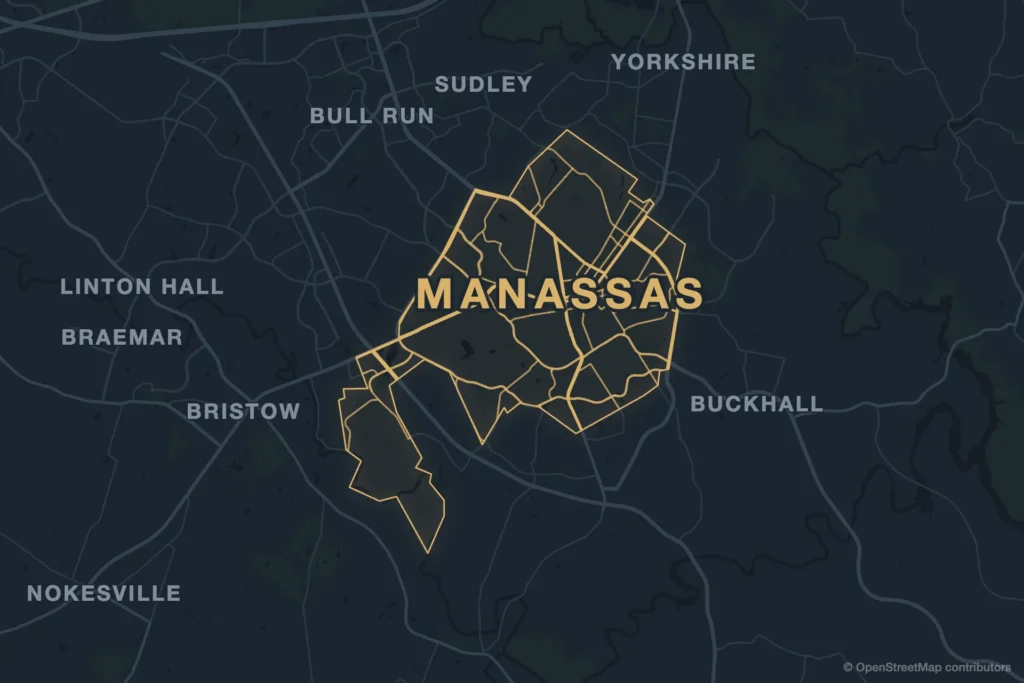
The City of Manassas is an independent city surrounded by Prince William County, about 30 miles west of Washington DC. Its draw is a historic rail-side Old Town paired with townhouses, detached houses and condominiums across a wide price range.

Manassas Market Snapshot

A high-level look at current pricing, demand, and sales activity in the Manassas real estate market.
$510,995

Median Sales Price

$271

Median Price Per Sq Ft

12

Median Days On Market

460

Annual Closed Sales

+2.2%

YoY Median Price Change

Manassas is a mixed market led by townhouses, with detached houses close behind and a condominium segment of roughly one sale in six. The snapshot covers every closed sale inside the Manassas city limits over the trailing twelve months through September 2026 — 216 townhouses and semi-detached homes, 170 detached houses, and 73 condominiums. Price per square foot uses interior living area.

Across all home types the median sale was $510,995 at about $271 per square foot, with a median of 12 days on market and sales averaging 99% of original list price. The median rose about 2% from the prior twelve months. Within segments, the townhouse median rose about 3% to $445,000 and the detached median held near $620,000.

Market data reflects recent 12-month activity. Individual buildings may vary.

What Would Your Home Sell For Here?

Get my personal read on your home’s value, built from recent sales nearby and the homes you’d compete with, not an algorithm. I reply within one business day. Free, and no obligation to list.

For Sale

Homes for Sale in Manassas

Every active Manassas listing, pulled live from Bright MLS.

Don’t see the right home?

We track private and off-market opportunities before they reach the MLS.

Recently Sold

Recently Sold in Manassas

Closed sales from the past 12 months — the comps that set today’s pricing.

Wondering what your home could sell for?

Get a pricing strategy built on these comps and current Manassas demand.

Living in Manassas

An overview of the City of Manassas, its Old Town, its housing and its commute.
Manassas is an independent city of roughly ten square miles, surrounded by Prince William County and separate from it for schools, taxes and services. Much of what carries a Manassas mailing address lies in the county, so this page covers only homes inside the city limits. The center of the city is Old Town, a grid of brick storefronts around the 1914 rail depot, the Harris Pavilion and the Manassas Museum. Housing here is varied. Townhouses are the largest share of sales, followed by detached houses and a meaningful condominium segment. The 1980s is the most common decade of construction, with 1960s and 1970s subdivisions closer to Old Town and a newer wave of townhouses and condominiums built since 2010. Community names that appear often in the sales record include Wellington, Point of Woods, Georgetown South and Battery Heights. A small number of houses near Old Town date to the early 1900s. Daily errands split between three areas. Old Town holds independent restaurants, a farmers market and the Harris Pavilion, which hosts public ice skating in winter. Sudley Road, the Route 234 Business corridor, carries the larger stores and UVA Health Prince William Medical Center. Liberia Avenue on the east side has grocery-anchored shopping centers. Dean Park is the city’s largest park, and Manassas National Battlefield Park sits a few miles north of the city line. The Manassas station in Old Town is served by Virginia Railway Express Manassas Line trains on weekdays and by Amtrak’s Cardinal, Crescent and Northeast Regional. A second VRE stop, Broad Run, is beside Manassas Regional Airport, just past the city’s southwest edge. Drivers use Route 28 north to I-66 or Route 234 and the Prince William Parkway toward I-95. There is no Metrorail station; the nearest is Vienna on the Orange Line. OmniRide runs local routes 65 and 67 and the Route 60 Manassas Metro Express to the Tysons Metrorail station. I’m glad to walk you through how the city’s subdivisions differ, which addresses fall inside the city limits, and what recent sales suggest for a specific home.

Key Highlights:

  • Housing character — Townhouses, detached houses and garden-style condominiums, mostly from the 1960s through the 1990s, with newer townhouses and condominiums since 2010
  • Green space — Dean Park and the Harris Pavilion lawn in the city; Manassas National Battlefield Park a few miles north
  • Daily essentials — Old Town restaurants and shops, larger stores on Sudley Road, grocery-anchored centers on Liberia Avenue
  • Transit — VRE Manassas Line and Amtrak at Manassas station in Old Town; VRE Broad Run beside the airport; OmniRide local buses and the Manassas Metro Express; Route 28 to I-66
  • Schools — Manassas City Public Schools, including Grace E. Metz Middle School and Osbourn High School; confirm assignments with the division
  • Market character — About 460 sales in twelve months at a median near $511,000, with townhouses the largest segment

Manassas Real Estate FAQs

Insight into the nuances of buying and selling in one of the country’s most complex urban markets.

Manassas is known for its historic Old Town around the 1914 rail depot, its role as a rail junction during the Civil War, and commuter rail service to Washington DC. Manassas National Battlefield Park is a few miles north of the city.
The city is in Northern Virginia, about 30 miles west of Washington DC, and is surrounded by Prince William County. Manassas Park borders it to the northeast, and Route 28 and Route 234 Business cross in the city.
There is no Metrorail station; the nearest is Vienna on the Orange Line. Virginia Railway Express Manassas Line trains run on weekdays from Manassas station and from Broad Run, just outside the city, and Amtrak’s Cardinal, Crescent and Northeast Regional stop at Manassas.
Townhouses made up close to half of recent sales, detached houses a bit more than a third, and condominiums the rest. Most homes date from the 1960s through the 1990s, with newer townhouses and condominiums built since 2010.
The median sale price over the past twelve months was about $511,000 across roughly 460 sales. Detached houses had a median near $620,000, townhouses about $445,000 and condominiums about $290,000.
The median time on market was 12 days, and homes sold for about 99 percent of original list price, with 257 of the 460 closing at or above it. Condominiums were slower, with a median of 34 days.
Old Town has independent restaurants, shops and a farmers market around Center Street. Larger stores line Sudley Road, and Liberia Avenue has grocery-anchored shopping centers.
Homes inside the city limits are served by Manassas City Public Schools, which operates five elementary schools, Baldwin and Mayfield intermediate schools, Grace E. Metz Middle School and Osbourn High School. Confirm the assignment for a specific address with the division’s boundary locator.

Location & Neighborhood

An independent city in the middle of Prince William County, where Route 28 meets Route 234 Business.

This page follows the Census boundary of the City of Manassas. The city meets Manassas Park on the northeast, reaches up the Sudley Road corridor on the northwest, and extends southwest along Route 28 to Manassas Regional Airport, with the Broad Run VRE station and the Route 234 bypass (Prince William Parkway) running just outside its southwestern edge. Prince William County surrounds the rest. Old Town sits at the center around the rail line and Center Street. Sudley Road holds the larger stores and the hospital, Liberia Avenue carries the east-side shopping centers, and Wellington Road and Godwin Drive serve the subdivisions on the southwest side.

Rail Station at the Center

Manassas station in Old Town is served by weekday VRE Manassas Line trains to Alexandria, Crystal City, L’Enfant and Union Station, and by three Amtrak routes. The Broad Run VRE station is beside the airport, just past the city’s southwest edge. Route 28 runs north to I-66 at Centreville, and Route 234 with the Prince William Parkway connects toward I-95. OmniRide runs local routes and the Manassas Metro Express to Tysons.

Errands cluster in three places. Old Town covers restaurants, coffee, small shops and the farmers market. Sudley Road has the larger stores along with UVA Health Prince William Medical Center. Liberia Avenue has supermarkets and service retail close to the east-side subdivisions. City offices, the Manassas Museum and the Harris Pavilion are all within a few blocks of the depot.

Neighboring Area:

  • Manassas Park — northeast, a separate independent city along Manassas Drive
  • Bristow — southwest, beyond Manassas Regional Airport and Route 28
  • Gainesville — northwest, along I-66 and US 29
  • Centreville — north on Route 28, across Bull Run in Fairfax County
  • Nokesville — south and west, the county’s rural area along Route 28

A Day In The Life - Snapshot

The quick details buyers ask about most.

Metro Access
No Metrorail in the city. Vienna on the Orange Line is the nearest station. Weekday VRE trains and Amtrak serve Manassas station in Old Town, with a second VRE stop at Broad Run just outside the city.
Walkability
Old Town is walkable, with restaurants, the depot and the museum within a few blocks. Most subdivisions beyond it are built around the car, with sidewalks but longer distances to stores.
Typical Home Types
Townhouses from the 1970s through the 1990s, detached houses on modest lots, garden-style condominiums, and newer townhouses and condominiums built since 2010.
Parking
Detached houses generally have driveways and many have garages. Older townhouse communities often rely on assigned surface spaces, while newer townhouses usually include garages. Old Town has public parking.
Vibe
Low-rise brick storefronts and a rail depot at the center, busiest on weekend mornings and evenings. Subdivision streets are quieter, with mature trees in the older sections.
Best For
Buyers who want a townhouse or detached house near commuter rail and an established downtown, and who accept a long drive or train ride to Washington DC and no Metrorail.

In-Depth Market Analysis

Manassas Market Insights

How pricing trends, absorption rates, and inventory levels are shaping buying and selling

Inventory & Absorption

About 460 homes closed inside the city limits in the twelve months ending September 30, 2026, up from roughly 420 the year before. Townhouses accounted for 216 sales, detached houses 170 and condominiums 73. The median time on market was 12 days, compared with 9 days a year earlier, so most homes still move quickly. Condominiums are the exception: their median stretched to 34 days from 7.

Pricing Dynamics

The overall median was about $511,000, up roughly 2 percent from $500,000. Detached houses held near $620,000, essentially unchanged, while townhouses rose to about $445,000 from $432,000. Condominiums had a median near $290,000. Price per square foot was about $271, flat year over year. Sales ranged from $160,000 to just over $1 million, and homes sold for about 99 percent of original list price, with 257 of the 460 closing at or above it.

Buyer Profile

Demand is deepest for townhouses between roughly $400,000 and $500,000 and for detached houses in the low $600,000s, both of which sold in a median of 8 to 11 days. Condominiums drew a slower response and sold for about 96 percent of original list price, which suggests more negotiation on older garden-style units. Newer townhouses and condominiums built since 2010 made up more than a fifth of sales.

Strategic Outlook

Prices were close to flat and volume rose, which points to a balanced market rather than a rapidly rising one. Detached houses and townhouses are still selling in under two weeks at close to list. The condominium segment bears watching, since sales counts rose while time on market lengthened. Sellers of condominiums should expect to price carefully; houses and townhouses are still drawing prompt offers.

Market Position Overview:

Inventory Level: Balanced with selective competition

Negotiation Environment: Moderate flexibility

Typical Days on Market: 25-45 (well-priced units)

Rental Demand: Consistent due to transit proximity

Long- Term Outlook: Stable, walkability-driven value

Manassas Housing & Architecture

From early twentieth-century houses near the depot to 1980s townhouse communities and recent infill, the city’s housing spans more than a century.
Old Town Houses
The blocks around the depot hold the city’s oldest housing, including a small number of early 1900s houses on a walkable street grid. They trade infrequently, and each one differs in condition, lot size and degree of renovation.
1960s and 1970s Subdivisions
Split-levels, ramblers and colonials from the 1960s and 1970s sit on modest lots in the older parts of the city. Together those two decades account for about a fifth of recent sales. Many of these houses have been updated in stages over the years.
Townhouse Communities
Townhouses are the city’s largest sales segment. Georgetown South and Point of Woods are among the most frequent community names in the sales record, and older rows usually rely on assigned surface parking. The median townhouse sale was about $445,000.
Wellington
Wellington, on the southwest side of the city, combines detached houses and townhouses under one community name. Counting its Cloverhill section, it is the most frequent subdivision label in recent city sales, with close to 50 closings.
Garden-Style Condominiums
Low-rise condominium buildings provide the lowest price point in the city, with a median near $290,000. Units took longer to sell than other home types this year, so condition and monthly fees matter in pricing.
Newer Townhouses and Condominiums
Homes built since 2010 account for roughly a fifth of recent sales. These are mostly garage townhouses and stacked condominiums on infill sites, with open floor plans and lower near-term maintenance than older stock.

Condo Buildings

Condo Buildings in Manassas

Building-by-building guides with amenities, fees, recent sales and what's for sale now.

Nearby neighborhoods

Close to Manassas

Ready to Talk About Your Next Move?

We’ll listen first, then recommend a strategy that fits your goals and timing.